

Wuxi Kcon Optoelectronics Technology Co.,Ltd.
BLOG
Hydraulic Correction Technology Drives Precision and Stability in Modern Industrial Systems
Release Time:
21 Jan,2026
As industrial equipment continues to evolve toward higher precision, greater efficiency, and stronger reliability, the demand for advanced motion control and alignment solutions has become increasingly important.
As industrial equipment continues to evolve toward higher precision, greater efficiency, and stronger reliability, the demand for advanced motion control and alignment solutions has become increasingly important. In this context, hydraulic correction technology is playing a critical role across a wide range of industries, offering an effective method for maintaining accuracy, correcting deviations, and ensuring stable system performance under heavy loads and complex operating conditions.
Hydraulic correction refers to the use of hydraulic systems to automatically or manually adjust the position, alignment, or force distribution of mechanical components. By leveraging the inherent advantages of hydraulic power—such as high force output, smooth motion control, and rapid response—hydraulic correction systems can compensate for misalignment, deformation, or uneven load distribution in real time. This capability is especially valuable in large-scale machinery, where even minor deviations can lead to reduced efficiency, accelerated wear, or costly downtime.
One of the key advantages of hydraulic correction is its ability to deliver precise and synchronized adjustments. Through the coordinated control of hydraulic cylinders, valves, and sensors, the system can ensure uniform movement and balanced force across multiple points. This is particularly important in applications such as heavy presses, rolling mills, lifting platforms, and structural positioning systems, where maintaining parallelism and alignment is essential for both product quality and operational safety.
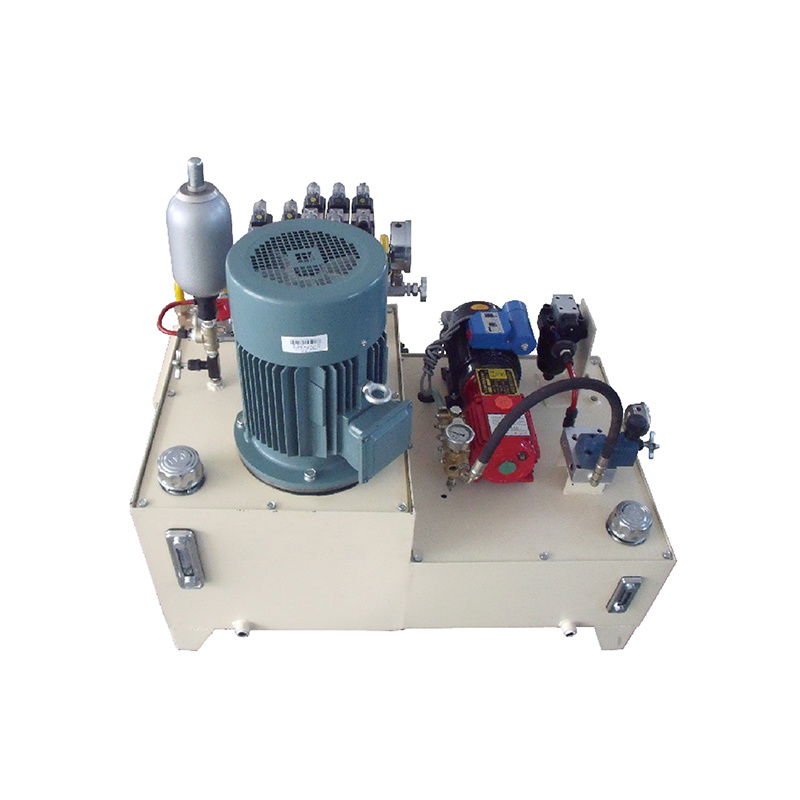
In manufacturing and construction environments, hydraulic correction systems are widely used to address challenges caused by uneven loads, material deformation, or foundation settlement. For example, during the lifting or positioning of large structures, hydraulic correction helps maintain level alignment, reducing stress concentration and minimizing the risk of structural damage. In precision manufacturing processes, it ensures consistent tolerances and improves overall product consistency.
The integration of sensors and control systems has further enhanced the performance of hydraulic correction solutions. Modern systems can monitor displacement, pressure, and load distribution in real time, enabling automatic adjustments without operator intervention. This level of automation not only improves accuracy but also reduces labor requirements and enhances workplace safety by minimizing manual adjustments in high-risk environments.
From an operational standpoint, hydraulic correction contributes to longer equipment service life and lower maintenance costs. By continuously correcting misalignment and balancing loads, the system reduces mechanical stress on critical components, preventing premature failure and extending maintenance intervals. This makes hydraulic correction an attractive solution for industries seeking to optimize asset performance and reduce total cost of ownership.
Hydraulic correction technology is also gaining importance in energy, transportation, and infrastructure projects, where large-scale equipment must operate reliably under demanding conditions. Whether applied in wind turbine installation, bridge construction, or heavy vehicle maintenance, hydraulic correction provides the stability and control required to meet strict engineering standards.
As industrial automation and intelligent control continue to advance, hydraulic correction systems are becoming more efficient, responsive, and adaptable. The combination of hydraulic power with digital control technologies is enabling smarter correction solutions that can adapt to changing loads and operating conditions in real time.
In summary, hydraulic correction has become an essential technology for achieving precision, stability, and reliability in modern industrial systems. By offering powerful, accurate, and flexible adjustment capabilities, hydraulic correction supports safer operations, higher product quality, and improved equipment performance across a wide range of applications. As industries continue to pursue greater efficiency and control, the role of hydraulic correction is expected to grow even further.
More Information

Contact Number:
Email:
WhatsApp:
Company Address:
No. 9 Plant, 101 Xinjin Road, Xiwu District, Wuxi, Jiangsu Province, China