

Wuxi Kcon Optoelectronics Technology Co.,Ltd.
BLOG
The Role of Magnetic Powder Brakes in Modern Industrial Applications
Release Time:
07 Jan,2026
The magnetic powder brake provides smooth, adjustable torque control, ensuring precise and reliable braking for industrial machinery and testing equipment.
In the world of modern manufacturing and industrial automation, the demand for precise and reliable braking systems has grown significantly. Among various technologies, the magnetic powder brake has emerged as a critical solution for applications requiring smooth torque control, consistent performance, and adjustable braking force. Widely used in industrial machinery, testing equipment, and automation systems, magnetic powder brakes offer unique advantages that traditional mechanical braking systems cannot match.
A magnetic powder brake works by utilizing a combination of magnetic fields and ferromagnetic powder to generate a controlled resistive torque. When an electric current passes through the brake’s coil, a magnetic field is generated. This magnetic field causes the powder inside the brake to magnetize, creating resistance between the rotor and the output shaft. The resistance produces a braking force that can be finely adjusted by controlling the current, allowing for precise torque regulation.
One of the main advantages of the magnetic powder brake is its smooth and controllable torque. Unlike mechanical brakes that may exhibit sudden engagement or jerky motion, magnetic powder brakes provide a gradual increase in torque as the current increases. This characteristic is particularly valuable in applications such as tension control systems, winding machines, and dynamometers, where consistent and predictable torque is essential for process quality and efficiency.
The adjustable nature of magnetic powder brakes makes them highly versatile across different industrial applications. For example, in textile and paper processing, maintaining a consistent tension on rolls of material is critical. Magnetic powder brakes can apply precise torque to rollers, ensuring uniform tension and reducing the risk of material deformation or damage. In testing laboratories, magnetic powder brakes are used in dynamometers to simulate real-world load conditions and test motor or engine performance under controlled resistance, providing valuable data for engineering analysis and product development.
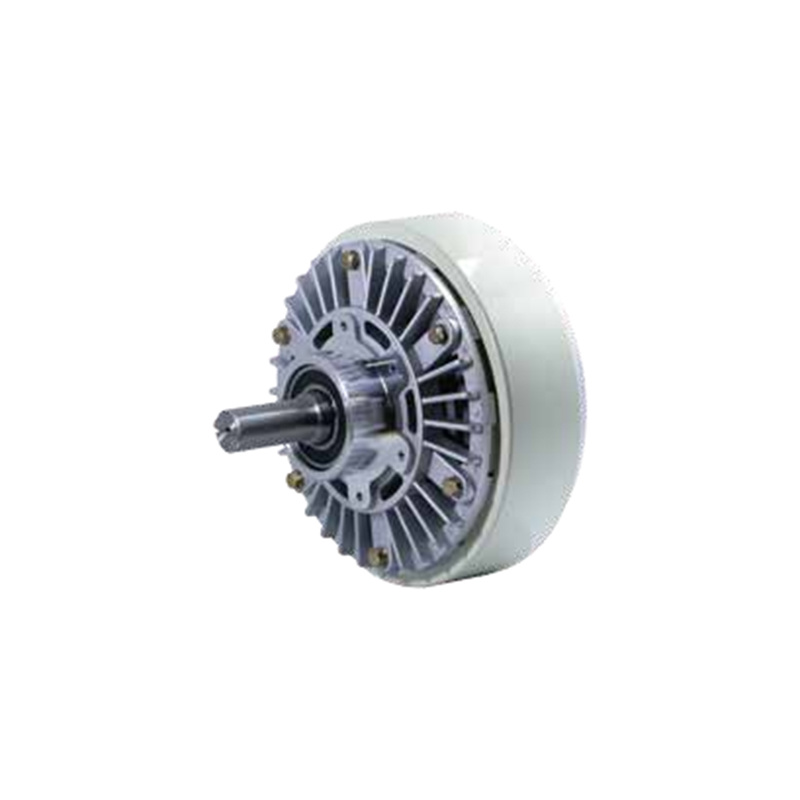
Another key benefit of the magnetic powder brake is its low maintenance requirement. Since there is no direct mechanical contact between the moving parts that generate torque, wear and tear are minimal compared to traditional friction brakes. This reduces downtime and maintenance costs, making magnetic powder brakes a cost-effective solution for continuous industrial operations. The absence of physical contact also allows for consistent performance over long periods, ensuring reliable results in critical applications.
Temperature stability and environmental adaptability further enhance the appeal of magnetic powder brakes. Many models are designed to operate efficiently in a wide range of temperatures, and their construction materials resist corrosion, dust, and vibrations commonly found in industrial environments. This ensures that the braking performance remains consistent even under harsh conditions, contributing to the overall reliability and safety of machinery and automation systems.
Integration with electronic control systems is another area where magnetic powder brakes excel. They can be connected to programmable controllers, sensors, and feedback systems, enabling automated adjustment of braking force based on real-time operational requirements. This capability is particularly valuable in modern smart manufacturing, where adaptive control and precise automation are critical for productivity and product quality.
The magnetic powder brake also plays an important role in energy efficiency and process optimization. By applying only the necessary braking torque at any given moment, these brakes reduce energy waste and minimize heat generation, which is especially important in high-speed or high-load applications. Engineers can fine-tune the braking torque to match specific process requirements, leading to improved product quality, reduced material waste, and optimized operational efficiency.
In conclusion, the magnetic powder brake represents a significant advancement in industrial braking technology. Its ability to provide adjustable, smooth, and reliable torque makes it indispensable in a variety of applications, including tension control, winding operations, dynamometer testing, and automated manufacturing systems. With low maintenance, high durability, and adaptability to harsh industrial environments, magnetic powder brakes not only improve performance and safety but also contribute to cost savings and operational efficiency. As industries continue to adopt smart manufacturing and automation technologies, the role of magnetic powder brakes will only grow in importance, providing engineers and operators with the precise control needed to meet modern production demands.
More Information

Contact Number:
Email:
WhatsApp:
Company Address:
No. 9 Plant, 101 Xinjin Road, Xiwu District, Wuxi, Jiangsu Province, China