

Wuxi Kcon Optoelectronics Technology Co.,Ltd.
BLOG
Corona Discharge Rack: Enhancing Surface Treatment Efficiency in Industrial Applications
Release Time:
04 Mar,2026
Corona discharge racks have become an essential component in modern industrial surface treatment processes. Widely used in printing, coating, and adhesive industries, these systems improve the surface energy of materials such as plastics, films, and nonwoven fabrics, ensuring better adhesion, ink wetting, and coating uniformity.
Corona discharge racks have become an essential component in modern industrial surface treatment processes. Widely used in printing, coating, and adhesive industries, these systems improve the surface energy of materials such as plastics, films, and nonwoven fabrics, ensuring better adhesion, ink wetting, and coating uniformity. By creating a high-voltage electrical discharge, a corona discharge rack modifies the molecular structure of a material’s surface, increasing its wettability and preparing it for subsequent processing steps.
The primary function of a corona discharge rack is to treat polymer surfaces that are otherwise difficult to bond with inks or coatings. Many materials like polyethylene (PE), polypropylene (PP), and polyolefin films are chemically inert, resulting in low surface energy. Traditional adhesives and inks struggle to adhere to these surfaces, leading to poor print quality or delamination. A corona discharge rack solves this problem by generating an ionized air region between the electrodes and the material surface. This discharge introduces polar functional groups, effectively increasing the surface energy and enabling strong, long-lasting adhesion.
Design considerations are crucial for an effective corona discharge rack. The system typically includes high-voltage electrodes, a grounded roll or web, and a power supply capable of generating tens of kilovolts at high frequency. The electrodes are often arranged in a grid or wire-bar configuration to ensure uniform treatment across the material’s width. Material speed, distance between electrodes, and power settings are carefully controlled to optimize surface modification without causing damage, scorching, or over-etching.
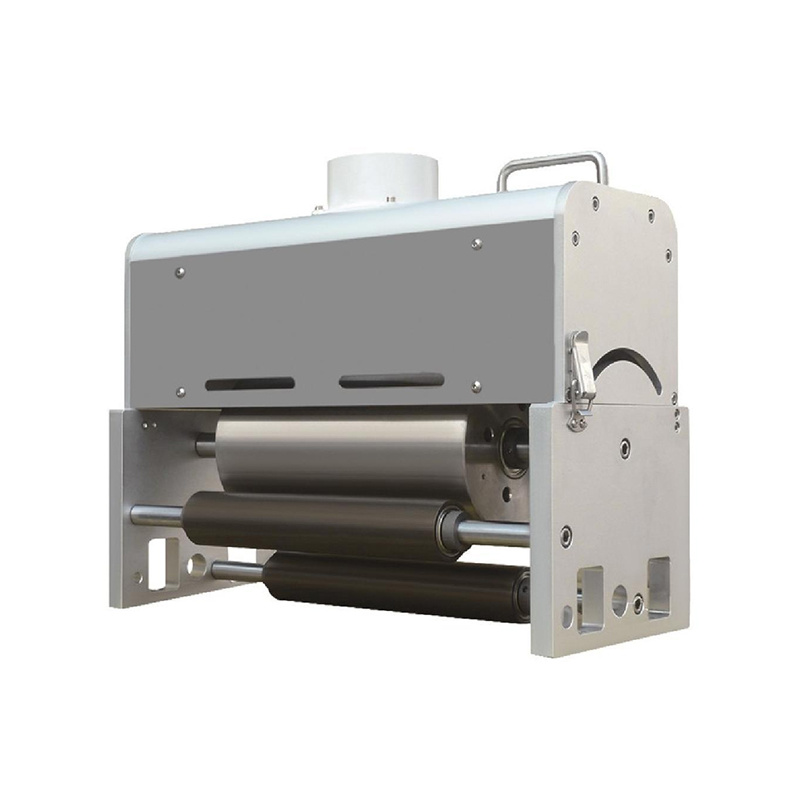
Corona discharge racks are widely applied in various industries. In the printing sector, they are used to pre-treat films and sheets to ensure inks adhere uniformly, preventing smudging and ink peeling. In packaging, corona treatment enhances adhesion of laminates, coatings, or varnishes, improving product durability and shelf appearance. In the textile and nonwoven industry, these systems improve the bonding of functional coatings, dyes, or adhesives, enabling performance fabrics and medical textiles with enhanced properties.
Energy efficiency and safety are important factors in the operation of a corona discharge rack. Modern systems incorporate advanced power supplies with adjustable voltage and frequency controls, allowing operators to fine-tune treatment intensity and reduce energy consumption. Safety features such as grounded frames, shielding, and automatic shutdown mechanisms protect personnel from high-voltage exposure while ensuring reliable operation.
Maintenance and operational consistency are also key considerations. Electrodes must be periodically cleaned or replaced to maintain uniform discharge, while power supplies and dielectric barriers require routine inspection. Automated monitoring and control systems are increasingly used to track performance, optimize treatment, and reduce downtime, ensuring consistent surface modification quality across production runs.
The corona discharge process also supports various material thicknesses and treatment widths, making it highly adaptable to different production lines. It can treat both flat sheets and rolled webs, providing flexibility for continuous processes in large-scale manufacturing. In addition, multiple-pass systems allow for higher surface energy when needed, ensuring compatibility with demanding inks, adhesives, and coatings.
Technological advancements in corona discharge racks include improvements in electrode materials, dielectric coatings, and power supply efficiency. Electrode designs now focus on enhancing uniform discharge, reducing ozone generation, and minimizing surface damage. Dielectric barriers and cooling systems improve electrode lifespan and treatment stability. Additionally, digital controls and data logging allow manufacturers to maintain precise records of surface treatment parameters, supporting quality assurance and regulatory compliance.
Corona discharge racks also play a critical role in environmental sustainability. By improving adhesion, they reduce the need for primers, solvents, or chemical treatments that might be harmful or generate volatile organic compounds (VOCs). This contributes to safer working environments, lower emissions, and reduced environmental impact.
In conclusion, corona discharge racks are indispensable tools for modern surface treatment applications. They enhance the surface energy of chemically inert materials, ensuring strong adhesion for inks, coatings, laminates, and adhesives. With careful design, precise control, and regular maintenance, these systems provide consistent, high-quality surface modification for a wide range of industrial applications. Industries such as printing, packaging, textiles, and electronics continue to benefit from the efficiency, reliability, and environmental advantages offered by advanced corona discharge racks. As technology evolves, these systems will remain at the forefront of surface treatment innovation, enabling manufacturers to meet ever-increasing standards of product quality and performance.
Previous
More Information

Contact Number:
Email:
WhatsApp:
Company Address:
No. 9 Plant, 101 Xinjin Road, Xiwu District, Wuxi, Jiangsu Province, China